How to sterilise jars
15 August 2016

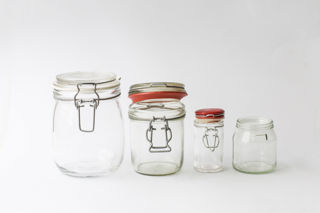
Sterilising might sound like a tricky task, but it simply requires heating something to a point where no bacteria can survive. Sterilising jars or containers when making jams, chutneys, preserves, ferments and pickles is an important step to prevent all of your hard work spoiling due to a buildup of harmful bacteria.
If you are using jars with rubber seals, be sure to remove these before placing the jars in the oven. When adding food to the jars after sterilising, it is necessary that both the food and jars are at the same temperature so that the jars don’t crack. If fermenting, it’s best to avoid using the rubber seal entirely, as the tight seal can encourage carbon dioxide build up that can lead to the container exploding if the pressure isn’t released regularly.
Preheat the oven to 160°C
Place the jars upside down onto a baking tray and into the oven for 10-15 minutes
Boil the lids in boiling water for 10 minutes
If using a plastic container, first make sure it is food-safe – specifically a HDPE or PET type of plastic. Wash as above, then boil in water for 10 minutes, ensuring the container is fully submerged
If using a ceramic container, choose a breathable earthenware pot (called an ‘onggi’ in Korean) that is lead-free and cadmium-free. Sterilise the same way as described for the plastic container
If using fermenting weights, sterilise these by boiling them as per step 4
Now you know how to get going why not try one of our delicious jam recipes. Karen’s Easy raspberry jam is a good place to start for beginners or for something with a bit of a twist try Russell Bateman’s Strawberry, long pepper and lime jam.
For a savoury option, try your hand at fermenting with Neil Campbell’s Savoy cabbage kimchi or Anna Tobias’s Swede sauerkraut. Give John Eggleton’s Tomato chilli and ginger chutney a go slathered on a burger or pair William Drabble’s Beetroot chutney with a decadent cheese board.
Please sign in or register to send a comment to Great British Chefs.